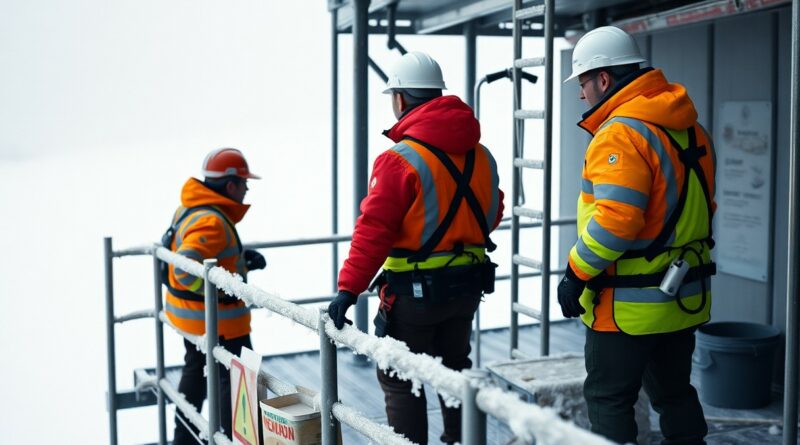
Top Health and Safety Practices for Scaffolders Working in Cold Climates
There’s no room for error when you’re working on scaffolds in Norway, Sweden, Finland, or Denmark, where temperatures can drop below -20°C and icy surfaces increase fall risks. You must wear insulated, non-slip footwear and layer clothing to prevent hypothermia and frostbite. Scaffold platforms need double-checking for ice accumulation each morning. This guide reflects ScaffoldersPro’s commitment to sending only fully prepared crews into extreme winter conditions.
Key Takeaways:
- Scaffolders must wear layered cold-weather PPE that includes insulated gloves, thermal base layers, and waterproof outerwear to maintain dexterity and body heat while working on frozen platforms in Norway, Sweden, Finland, or Denmark.
- Ice accumulation on scaffold components increases slip and structural failure risks; crews should conduct frequent inspections and use anti-slip grating, de-icing tools, and secure footing techniques before starting tasks.
- Early recognition of hypothermia signs-such as shivering, slurred speech, and slowed movement-is important, and teams should establish clear voice or signal-based communication protocols to check on each other during long winter shifts in remote or windy locations.
Essential PPE Types for Nordic Environments
Workers in Norway, Sweden, Finland, and Denmark face sub-zero temperatures that demand specialized cold weather PPE to maintain safety and performance. A proper layering system includes thermal base layers, insulated outerwear, and extreme-weather gloves designed for dexterity and warmth. The requirement for specialized cold weather PPE ensures protection against frostbite and hypothermia. The
| Thermal base layers | Made from moisture-wicking fabrics to regulate body temperature |
| Insulated outerwear | High-visibility jackets and pants rated for -30°C |
| Extreme-weather gloves | Waterproof, insulated, with grip enhancement for handling tools |
| Insulated safety boots | Rated for -40°C with non-slip soles for icy surfaces |
| Balaclavas and face protection | Prevent frostbite on exposed skin in wind-chill conditions |
Thermal base layers and moisture-wicking fabrics
You must wear thermal base layers made of moisture-wicking fabrics to prevent sweat buildup, which can lead to rapid heat loss. These layers maintain a dry microclimate next to your skin, even during high-exertion tasks in Finland’s -25°C winters. The
Insulated high-visibility outerwear and extreme-weather gloves
Insulated high-visibility outerwear ensures you remain seen on dark Nordic job sites while protecting against wind and snow. Extreme-weather gloves provide dexterity and warmth down to -30°C, critical when handling metal scaffolding in Sweden. The
Insulated high-visibility outerwear is engineered with reflective strips meeting EN ISO 20471 standards, necessary for low-light conditions across Denmark and Norway. These garments trap heat using thermal linings and block wind penetration, while extreme-weather gloves combine waterproof shells with thermal insulation to protect against frostbite during prolonged exposure. You rely on these components daily when working at height in sub-zero environments. The
Safety Tips for Navigating Icy Structures
Safe working practices on icy structures are mandatory to prevent slips, trips, and falls during winter shifts. Use anti-slip footwear with deep treads, maintain three points of contact when climbing, and always inspect surfaces before stepping. Keep tools secured to avoid sudden shifts in balance. Recognizing early signs of surface ice can save lives.
Regular ice removal and grit application on platforms
Clear ice from platforms at least every two hours during freezing conditions. Apply grit or de-icing agents immediately after removal to maintain traction. Assign a team member to monitor high-traffic zones where ice forms quickly. Recognizing these patterns reduces accident risks significantly.
Enhanced fall protection protocols for slippery surfaces
Anchor all fall arrest systems to secure, non-slip points and inspect them before each shift. Use double-lanyard setups to ensure constant attachment when moving across icy sections. Recognizing that standard protocols may fail on slick surfaces ensures heightened caution.
When working on slippery surfaces, your fall protection system must exceed baseline requirements. Double-lanyard configurations allow continuous connection during transitions, minimizing exposure to falls. Ensure anchors are placed above icy zones and regularly check for ice buildup around attachment points. OSHA Standard 1926.501 mandates fall protection at 6 feet, but in icy conditions, even small slips can lead to severe injury-proactive measures are non-negotiable.
Step-by-Step Hypothermia Prevention
Protecting yourself from hypothermia begins with understanding risk factors and acting before symptoms escalate. You must monitor weather conditions, wear layered thermal clothing, and stay dry to reduce heat loss. Learn more about safe practices by reading Can You Go on Scaffolding in Freezing or Frosty Conditions?
| Protocol | Action |
| Temperature Monitoring | Check wind chill hourly; work暂停 below -10°C |
| Insulated Gear | Wear moisture-wicking base layers and waterproof outerwear |
| Buddy System | Pair up to watch for shivering, slurred speech, or confusion |
Recognizing early warning signs of cold stress
Shivering, numbness, and tingling in extremities are your body’s first alerts. You may also feel fatigued or develop mild confusion. Recognizing these symptoms early allows immediate action-retreat to warmth and replace wet clothing to prevent progression to hypothermia.
Implementing mandatory warming breaks and hydration schedules
Every two hours, you must take a 15-minute break in a heated shelter. Hydrate with warm, non-caffeinated fluids to maintain circulation. These scheduled pauses drastically reduce cold stress risks and keep cognitive function sharp during long shifts in freezing conditions.
Regular warming breaks are not optional-they are a proven defense against hypothermia. At -5°C with wind, exposed skin can begin freezing in under 30 minutes. By enforcing structured breaks and hydration, supervisors ensure crews remain alert and physically capable. Workers who follow these protocols report fewer incidents and higher endurance in prolonged cold exposure scenarios.
Critical Factors Influencing Crew Communication
Clear communication keeps your team safe during winter shifts, especially when visibility-limiting conditions like snowstorms or fog reduce sight to under 10 meters. Use two-way radios with insulated headsets and establish check-in intervals every 15 minutes. Assume that
Establishing clear signaling methods for high-wind scenarios
Wind speeds above 40 km/h can drown out verbal calls, making hand signals or radio codes important. Agree on standardized gestures for load movement, emergency stops, and equipment malfunctions before each shift. Assume that
Coordinating emergency response plans for remote Nordic sites
On remote Nordic sites like those in northern Norway or Swedish Lapland, response times can exceed two hours due to terrain and weather. Pre-map evacuation routes and designate emergency shelters stocked with thermal gear. Assume that
When working in remote Nordic regions such as Svalbard or Finnish Lapland, where temperatures drop below -30°C and daylight lasts fewer than four hours in winter, your emergency plan must include satellite phones, GPS beacons, and on-site medical supplies. Local rescue services, like Norway’s Redningsselskapet, may take 120 minutes to reach inland scaffold sites during blizzards. Immediate team-led response is your best chance for survival.
Pros and Cons of Winter Scaffolding Operations
Working on scaffolding in cold climates demands careful evaluation of operational trade-offs. While winter projects maintain critical infrastructure timelines, they expose workers to extreme conditions that heighten safety risks and equipment failure potential.
| Pros | Cons |
|---|---|
| Enables year-round progress on time-sensitive infrastructure | Increased risk of slips, trips, and falls due to ice accumulation |
| Reduces project delays in regions with short construction windows | Steel components become brittle below -20°C, risking structural failure |
| Minimizes public disruption by avoiding peak-season work | Tools and hydraulic systems prone to freezing at -10°C |
| Supports emergency repairs during winter weather events | Reduced dexterity from thick gloves increases handling errors |
| Lowers scheduling conflicts with other trades | Condensation in compressed air lines causes malfunctions |
| Utilizes lower wind speeds typical of stable Arctic high-pressure systems | Shorter daylight limits productive hours, especially above 60° latitude |
| Aligns with seasonal energy demand peaks for utility maintenance | Batteries in electronic tools lose up to 50% efficiency at -18°C |
| Leverages frozen ground for improved site access and stability | Rescue operations delayed by snow accumulation and road closures |
| Preserves project funding cycles requiring annual expenditure | Increased fatigue from cold stress reduces mental alertness |
| Allows use of specialized cold-weather materials like ASTM A325 bolts rated to -45°C | Higher PPE costs due to insulated gear and heated clothing systems |
Benefits of specialized winter training and preparedness
You gain a critical edge when trained in cold-weather protocols specific to scaffolding, such as recognizing early signs of frostbite and using de-icing techniques. OSHA-endorsed programs like the Cold Stress Prevention Course reduce incident rates by up to 40% in northern U.S. states.
Challenges of reduced daylight hours and equipment freezing
Daylight drops to fewer than six hours a day above 55° latitude in December, compressing safe working windows. Hydraulic jacks and power tools fail more often when temperatures fall below -10°C, increasing downtime and hazard exposure.
With the sun rising as late as 8:30 AM and setting before 4:00 PM in regions like Alberta or Minnesota, your visibility diminishes rapidly, raising collision and misstep risks. Equipment freezing isn’t just inconvenient-compressed air systems can ice internally at -7°C, leading to sudden tool lockups. Preventive measures like insulated hoses and battery warmers are not optional; they are crucial for maintaining function and safety in sustained subzero conditions.
Conclusion
Considering all points, you must prioritize layering, insulated gear, and regular warm-up breaks when working on scaffolds in the cold climates of Norway, Sweden, Finland, and Denmark. ScaffoldersPro ensures your crew follows strict protocols aligned with the Cold Stress Guide | Occupational Safety and Health … to prevent hypothermia and maintain safety and productivity.
FAQ
Q: What cold-weather PPE should scaffolders wear when working in Nordic climates like Norway and Sweden?
A: Scaffolders in Norway, Sweden, Finland, and Denmark must wear layered cold-weather personal protective equipment designed for high mobility and insulation. A moisture-wicking base layer helps keep skin dry, while a mid-layer like fleece or thermal wool retains body heat. The outer shell should be windproof, waterproof, and breathable to protect against snow and freezing winds without trapping sweat. Insulated, grippy work boots rated for sub-zero temperatures are imperative-look for models with thermal linings and slip-resistant soles. Gloves must balance dexterity and warmth; many scaffolders use liner gloves under insulated outer gloves that can be removed briefly during precise tasks. Head protection includes a balaclava or thermal hood under the hard hat to prevent frostbite on ears and neck. All PPE must meet EN standards for cold environments and allow full range of motion for climbing and handling scaffold components.
Q: How can scaffolders work safely on icy or snow-covered scaffold structures in Finland and Denmark?
A: Ice and snow accumulation on platforms, rungs, and base plates create serious fall hazards in cold climates. Scaffolders must inspect every level of the structure before use, clearing snow and ice with non-metallic scrapers or approved de-icing tools to avoid damaging components. Anti-slip grating or mats should be installed on platforms and landings where possible. Workers need boots with deep treads designed for ice, and fall protection systems-including harnesses, lanyards, and anchor points-must be used at all times when working at height. Erecting or dismantling scaffolding in freezing rain or heavy snow should be postponed unless absolutely necessary. Daily pre-shift checks include verifying that base jacks are stable on frozen or snow-packed ground and that mudsills haven’t shifted due to frost heave. Team leads must ensure all workers are trained in winter-specific fall prevention and that emergency retrieval plans are in place.
Q: What steps prevent hypothermia and maintain crew communication during winter shifts in Scandinavian conditions?
A: Hypothermia can set in quickly when body temperature drops below 35°C, even during routine tasks in Sweden or Finland. Scaffolders should work in pairs or small teams with frequent buddy checks to monitor for early signs like shivering, slurred speech, or slowed movement. Scheduled warm-up breaks every 60 to 90 minutes in heated enclosures or vehicles help maintain core temperature. Hot drinks like soup or warm non-caffeinated beverages are encouraged, but alcohol and smoking should be avoided as they impair circulation. Crew communication relies on clear, concise check-ins at shift start, mid-point, and end, using radios with low-temperature batteries that are kept warm in inner pockets. Hand signals are pre-agreed for noisy or windy conditions. Supervisors must adjust shift lengths based on wind chill and monitor weather alerts. ScaffoldersPro ensures all deployed crews receive winter safety training, including emergency response for cold-related illness, and are equipped with personal thermal monitors when working in remote or extreme conditions.