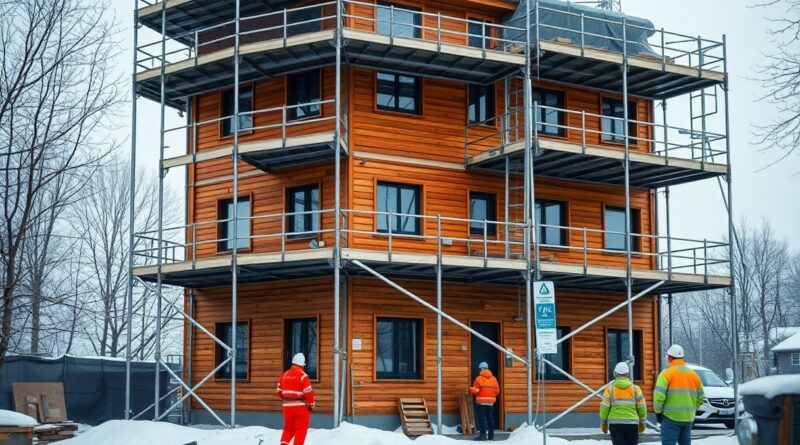
Scaffolding in the Nordics – What Makes Scandinavian Standards Different
Standards in Nordic scaffolding are shaped by strict safety regulations, extreme weather conditions, and high-quality material requirements across Norway, Sweden, Denmark, and Finland. You face temperatures as low as -30°C, demanding structural resilience and anti-slip measures. EN 12811 compliance is mandatory, but local rules often exceed EU norms, especially in Norway’s oil and gas sector. You must adhere to weekly inspections and certified worker training, reducing accident rates significantly compared to global averages.
Key Takeaways:
- Scandinavian scaffolding standards prioritize worker safety through strict regulations that exceed many international requirements, with mandatory fall protection, detailed risk assessments, and frequent on-site inspections common across Norway, Sweden, Denmark, and Finland.
- Working in extreme Nordic weather-especially sub-zero temperatures, high winds, and heavy snow-demands specialized materials and techniques, such as cold-resistant fittings and faster assembly methods to limit exposure.
- Quality and precision are non-negotiable on Nordic sites, where scaffolding must support tight project timelines and integrate smoothly with other trades, making experienced, trained crews a consistent priority for contractors.
The Cold and the Iron
Winter temperatures across Nordic construction sites regularly plunge below -20°C, demanding specialized steel alloys in scaffolding to prevent brittle fracture under load. You rely on materials tested to Swedish Standard SS-EN 12811 specifically for cold-weather performance, ensuring structural integrity when thermal stress peaks.
The Grip of the Frost
Ice accumulation on tubes and couplers creates slip hazards that require hourly inspections and anti-icing treatments. You face scaffold surfaces that can become dangerously slick within minutes during thaw-freeze cycles, especially in coastal regions like Tromsø where humidity amplifies frost buildup.
Laboring in the Dark
During December, daylight in northern Sweden lasts only four hours, forcing you to work under artificial lighting for most of your shift. Extended darkness increases fatigue and heightens the risk of missteps on elevated platforms, making compliant illumination a non-negotiable safety requirement.
Night work dominates winter schedules in Finland and Norway, where sites must meet minimum lux levels of 200 on working decks as mandated by Arbeidstilsynet and OSHA Finland. You operate under high-intensity LED arrays mounted directly to scaffolding, ensuring visibility without glare or shadow zones that obscure footholds or tools.
The Law of the High Standards
Every scaffold erected in Norway, Sweden, Denmark, and Finland must comply with national regulations that exceed typical EU directives. You face strict oversight from authorities like Arbejdstilsynet in Denmark and Arbetsmiljöverket in Sweden, where failure to meet requirements results in immediate work stoppages. Non-compliance can lead to fines exceeding €20,000, reinforcing why precision and adherence are non-negotiable across Nordic construction sites.
The Strict Nordic Code
Safety standards are defined by national adaptations of the EN 12811 series, but each country enforces additional rules. In Finland, the Työturvallisuuskeskus mandates scaffold inspections every seven days, while Sweden requires certified scaffolders to carry government-issued credentials on-site at all times. Denmark’s Kravspecifikation 3.03 sets load-bearing minimums at 4 kN/m², higher than most European benchmarks, ensuring structural resilience under extreme conditions.
Building for the Long Winter
Harsh Nordic winters demand scaffolding that withstands snow loads up to 1.5 kN/m² and temperatures as low as -30°C. You must use frost-resistant materials and anti-slip platforms, especially in northern Norway and Finland, where construction continues through months of darkness. Ice accumulation is a leading cause of falls, making heated platforms and frequent de-icing mandatory on all high-level structures.
Extended darkness and frozen ground conditions require specialized planning long before scaffolding goes up. In Kiruna, Sweden, projects use thermally insulated base plates to prevent frost heave from destabilizing towers. Daily checks for ice buildup on couplers and boards are enforced, and accident records from Tromsø in 2022 show 38% of winter falls were linked to undetected black ice on walkways. These realities shape how you design, assemble, and maintain every system across the region.
The Value of the Experienced
Working at height in the Nordics demands more than technical skill-it requires resilience. Scaffolders with Nordic experience are particularly valuable because they know how to work when the ground is hard and the wind is sharp. Their expertise ensures safety and efficiency in extreme conditions. Learn more about how About Nordic Platform & AIRSTEPS scaffolding deck in supports these professionals with innovative solutions designed for northern climates.
The Skill of the Northmen
Years of battling frozen terrain and gale-force winds shape a unique class of scaffolder. You adapt quickly when frost stiffens joints and sudden storms test stability. Nordic-trained crews master precision under pressure, turning harsh environments into controlled worksites through disciplined technique and local know-how.
Why Experience Matters Most
Seasoned scaffold builders recognize subtle shifts in weather and footing that others might miss. You rely on instinct forged through winters spent assembling platforms on ice-crusted surfaces. That awareness prevents accidents before they start.
When temperatures drop below -20°C and wind speeds exceed 25 m/s, only those with real Nordic exposure understand how to adjust ties, bracing, and deck placement. Incorrect assembly in such conditions can lead to catastrophic failure. Your experience ensures every clamp, board, and anchor meets the exacting demands of Scandinavian safety standards-where margins for error are non-existent.
The Specialized Search
When working in Nordic climates, you need teams trained for extreme cold. ScaffoldersPro sources crews familiar with sub-zero working conditions to ensure the work is done well. Compliance with regional safety expectations is non-negotiable-review the Swedish Scaffolding Regulations Overview | PDF to understand key requirements.
Finding the Right Labor
You face unique challenges when building scaffolding in freezing temperatures. ScaffoldersPro sources crews familiar with sub-zero working conditions to ensure the work is done well, reducing delays and avoiding safety risks common in icy environments.
The Strength of the Network
You gain access to a tightly coordinated network of professionals who understand Nordic weather constraints. ScaffoldersPro sources crews familiar with sub-zero working conditions to ensure the work is done well, guaranteeing reliable deployment across Sweden, Norway, and Finland.
Through long-standing partnerships, ScaffoldersPro maintains direct lines to certified scaffold teams who have worked in temperatures as low as -30°C. You benefit from rapid mobilization and proven performance in harsh winter projects, ensuring timelines and safety standards are consistently met across the region.
To wrap up
Drawing together Nordic standards, extreme weather conditions, and the precision of specialized scaffolding crews defines how Scandinavia approaches temporary structures. You work with stricter safety protocols established in Sweden’s Arbetsmiljöverket guidelines, face prolonged winters requiring cold-weather adaptations, and rely on highly trained teams certified under national schemes like Norway’s Scaffolding Passport. These elements shape a scaffolding industry distinct from others in both practice and expectation.
FAQ
Q: What safety regulations set Nordic scaffolding standards apart from other regions?
A: Nordic countries enforce strict, harmonized safety protocols that go beyond basic EU directives. Each nation-Norway, Sweden, Denmark, and Finland-implements rigorous inspection routines, mandatory fall protection at lower heights than in many other countries, and requires documented training for every worker on site. Scaffolding structures must be certified by a qualified supervisor before use, and daily checks are standard practice. Equipment logs, load calculations, and wind resistance assessments are routinely audited. These measures reduce accident rates significantly, but they demand a high level of precision and accountability from scaffolding crews.
Q: How do cold weather and seasonal conditions affect scaffolding operations in the Nordics?
A: Winter conditions in Scandinavia can last six months or more, with temperatures regularly dropping below -20°C and heavy snowfall common. Ice buildup on components, frozen ground affecting base stability, and slippery platforms increase risks dramatically. Scaffolding setups must account for snow loads on platforms and canopies, while materials like steel become more brittle in extreme cold. Crews use specialized anti-slip decking, heated enclosures for sensitive work, and insulated ties to maintain structural integrity. Workers wear layered PPE that doesn’t restrict movement, and site logistics include de-icing routines and shorter shift rotations to manage exposure.
Q: Why do contractors seek scaffolders with proven Nordic experience?
A: Contractors prioritize workers who have operated in Nordic environments because familiarity with local codes, weather protocols, and site culture reduces onboarding time and improves compliance. Scaffolders trained in Scandinavia understand how to adapt assembly sequences for icy conditions, interpret regional safety signage, and communicate effectively in multilingual teams where English often serves as the working language. ScaffoldersPro recruits exclusively from networks with documented Nordic project histories, ensuring crews can handle sub-zero builds, meet tight inspection timelines, and work efficiently within the high-expectation quality frameworks common across Scandinavian construction sites.