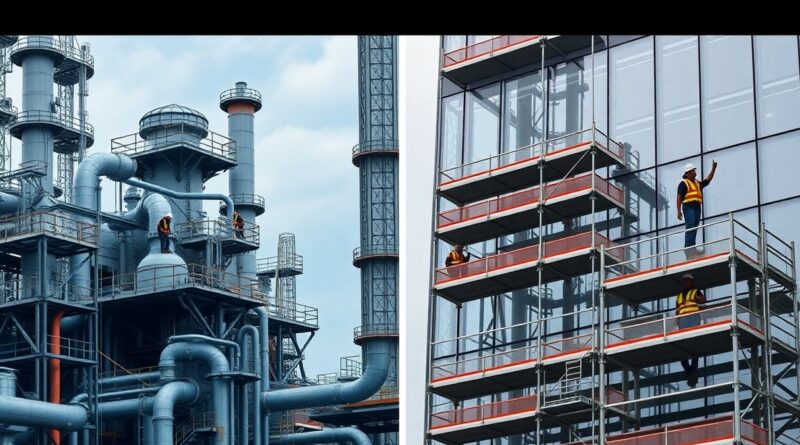
Industrial vs. Commercial Scaffolding Projects – Choosing the Right Crew
Just because a scaffolding crew works at height doesn’t mean they’re equipped for your specific project. Industrial sites like refineries and power plants demand crews trained for extreme hazards, while commercial builds require precision in tight urban spaces. Choosing the wrong team can lead to costly delays or dangerous safety failures. Learn how to match your job type with the right expertise by reading ScaffoldersPro’s guide on Choosing The Right Scaffold: Industrial & Commercial Use.
Key Takeaways:
- Industrial scaffolding projects demand crews trained in high-risk environments like refineries and power plants, where knowledge of confined spaces, fall protection, and compliance with OSHA and site-specific safety protocols is standard practice.
- Commercial scaffolding for offices or residential buildings requires precision in tight urban spaces, minimal disruption to occupants, and adaptability during phased construction or renovations.
- ScaffoldersPro assigns teams based on project type, pairing industrial specialists with heavy-duty industrial jobs and experienced commercial crews with urban construction and retrofitting tasks to ensure efficiency and safety.
The Industrial Frontier
Working in industrial environments demands rigorous safety protocols and advanced technical knowledge. You face high-risk conditions daily-extreme heights, live equipment, hazardous materials. ScaffoldersPro assigns crews with proven experience in refineries, power plants, and shipyards, ensuring every team member understands the unique challenges of heavy-industrial settings. Your project’s safety and efficiency depend on this precision in crew selection.
The Commercial Landscape
You work on tighter timelines when building scaffolding for office complexes or high-rise residences. Safety standards remain non-negotiable, but access and aesthetics often matter as much as structural integrity. Renovations in occupied buildings demand precision and minimal disruption, requiring crews who understand urban logistics. ScaffoldersPro assigns teams with proven experience in fast-paced, public-facing environments where efficiency and clean setup separate professionals from amateurs.
The ScaffoldersPro Standard
Every project demands precision, but industrial sites like refineries and power plants require extreme attention to safety and technical detail. At ScaffoldersPro, we assign crews with proven experience in your specific environment. You get specialists trained for high-risk settings or urban construction, never a one-size-fits-all team. Learn more with A Complete Guide to Commercial Scaffolding Services | Writers.
Final Words
To wrap up, your project’s environment dictates the expertise you need. Industrial sites demand crews trained for high-risk, complex settings like refineries and shipyards, while commercial jobs require precision in tighter, urban spaces. Choosing ScaffoldersPro means you get a team matched exactly to your project’s demands, with proven experience in either industrial or commercial scaffolding, ensuring safety, efficiency, and reliability every time.
FAQ
Q: What are the main differences between industrial and commercial scaffolding projects?
A: Industrial scaffolding projects take place in high-risk environments like oil refineries, chemical plants, power stations, and shipyards. These sites demand scaffolds that support heavy equipment, withstand extreme temperatures, and comply with strict safety regulations. Structures are often complex, built around pipes, reactors, and elevated platforms. Commercial scaffolding, on the other hand, is common in urban construction like office buildings, apartment complexes, and renovation jobs. The focus here is on access for tradespeople, public safety, and minimizing disruption in populated areas. Scaffolds are typically simpler in design and used for façade work, window installation, or painting. The environments shape the approach, tools, and crew experience needed.
Q: Why does crew experience matter more in industrial scaffolding?
A: Industrial sites operate under intense safety protocols due to the presence of hazardous materials, high voltage systems, and confined spaces. Scaffolders working in these areas must understand permit systems like hot work or confined space entry, and they often need specialized certifications such as OSHA 30, fall protection, or confined space training. They also work alongside welders, inspectors, and maintenance crews in tight coordination. Mistakes can lead to serious incidents. ScaffoldersPro assigns only crews with documented industrial experience to these jobs-people who’ve worked in live plants, followed site-specific safety plans, and built scaffolds under demanding conditions. This background ensures reliability and compliance when the stakes are high.
Q: How does ScaffoldersPro decide which crew to assign to a project?
A: ScaffoldersPro reviews the project scope, location, safety requirements, and structural complexity before assigning a team. For a refinery turnaround in Texas, the company selects crews with proven experience in petrochemical environments, familiarity with API standards, and a record of incident-free work. For a high-rise office renovation in Chicago, the focus shifts to crews skilled in swing-stage integration, public zone protection, and working near pedestrians. Each crew’s background is matched to the job’s demands. The company maintains separate rosters for industrial and commercial specialists, ensuring that every team arrives prepared with the right training, tools, and mindset for the specific site they’re entering.