
Why Delayed Scaffolding Projects Cost European Companies Millions
With labor shortages delaying scaffolding, you face budget overruns, extended timelines and damaged client trust that can drain millions from your projects; safety compromises and lost contracts amplify the exposure. You must secure a reliable scaffolder supply to protect schedules and reputation, and monitor market shifts via resources like Scaffolding Market Size, Share, Trends & Growth Report, … to plan workforce procurement and contingency staffing.
Key Takeaways:
- Budget impact – scaffolder labor shortages drive project delays that inflate direct costs (extended site management, equipment hire, overtime) and indirect costs (penalties, lost revenue), often adding millions to European projects.
- Timeline disruption – delayed scaffolding creates cascading schedule slips for follow-on trades, compresses critical-path work and extends overall program delivery, increasing risk across the portfolio.
- Client trust and commercial risk – repeated delays damage client confidence, trigger contract disputes or penalties, and reduce repeat business; securing a reliable scaffolder supply mitigates financial and reputational exposure.
Economic impact: direct costs
Delays from scaffolder shortages bite you in clear, measurable ways: industries report average direct cost uplifts of around 10-20% on delayed contracts, driven by extended site supervision, re-sequencing works and penalty clauses. For example, a mid-size retrofit in Berlin stalled three weeks and saw a direct budget overrun of roughly €120,000, while the client’s timeline slipped by a month, prompting compensation claims and long-term trust erosion.
Labour and overtime expenses
When your scheduled scaffold crew is unavailable, you end up paying premium labour rates, often 1.5-2× standard pay for overtime and agency hires; a 25-worker scaffolding task extended by two weeks can add €60,000-€90,000 in wages alone. Subcontractor reshuffling also forces you to absorb mobilisation surcharges and higher supervision costs, amplifying budget volatility and damaging your delivery reputation with clients.
Equipment idle and demobilisation fees
Idle scaffold, hoists and towers on-site still attract costs: storage, insurance and stand-by depreciation commonly amount to €500-€2,000 per week per major assembly, while demobilisation and remobilisation can each incur fixed contractor fees. You face direct cash outflows even when work stops, plus the administrative burden of reclaiming or rebooking kit.
In practice, you’ll see demobilisation fees range from a few thousand to tens of thousands of euros for large commercial sites; one Rotterdam office build reported a €25,000 demobilisation charge after a month-long labour gap, then another €18,000 to remobilise the same rigs. These costs escalate if you must store equipment off-site or pay insurance premiums, so securing a reliable scaffolder supply is often the fastest way to prevent the most damaging line-item hits to your project budget.
Timeline disruption and cascading delays
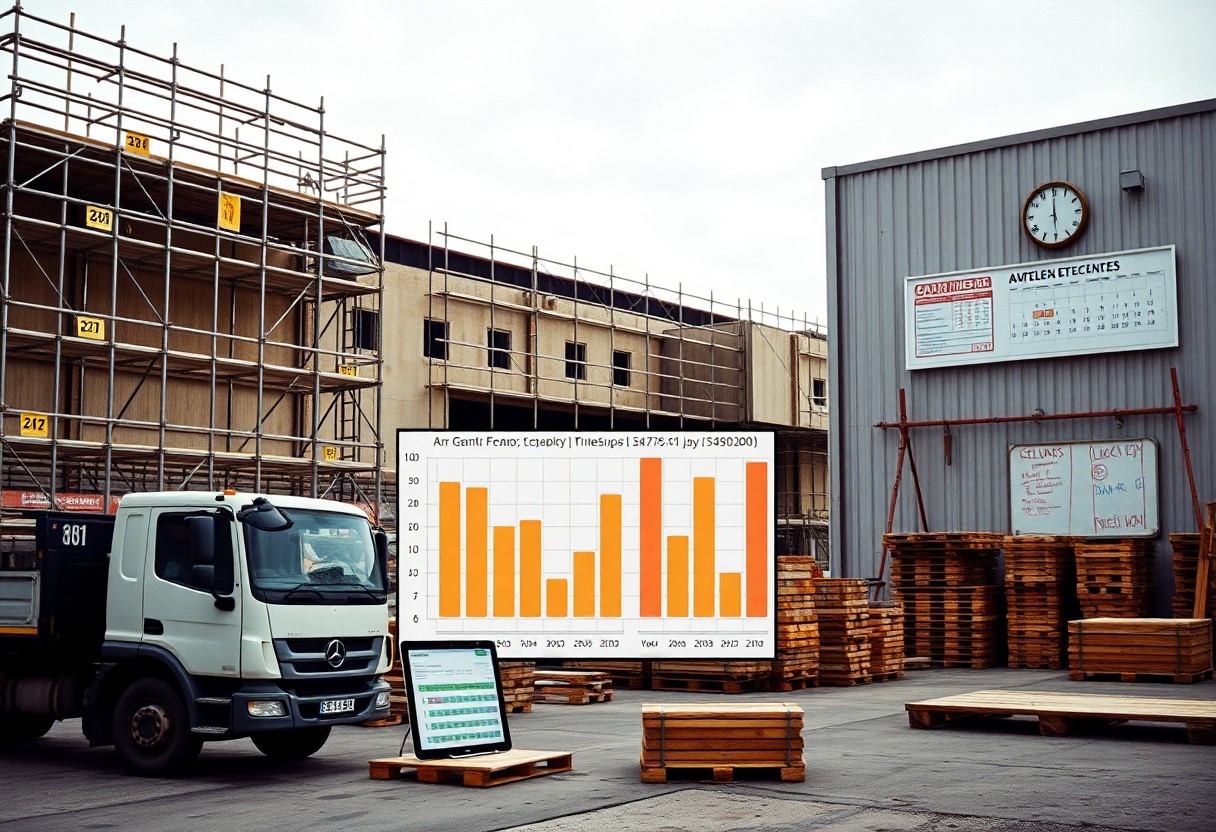
When your scaffold crews fall behind, every downstream activity shifts: cladding, M&E, and interior fit-outs wait. A single two-week shortage of scaffolders can extend overall completion by 4-8 weeks and raise project costs by 15-25%, eroding margins and client confidence. You end up managing claims, idle subcontractors, and accelerated rework to recover time – all because reliable scaffolder supply wasn’t secured.
Critical-path extension and knock-on projects
Delays on the scaffold-dependent critical path push follow-on projects into idle time and penalty exposure. If facade works slip, your M&E and glazing trades may incur standby costs of €20,000-€100,000 per week on large EU sites, and liquidated damages can escalate quickly. You need scaffold capacity aligned to the critical path to avoid cascading overruns and damaged client relationships.
Permitting, inspection and approval slowdowns
Permitting and inspection windows are rigid; missed scaffold inspections due to crew shortages create multi-week backlog risks. Municipalities have reported inspection delays of 2-6 weeks, and when your scaffold isn’t available at the appointed slot, handover stalls and cash flow timings slip. You must plan scaffold availability around regulatory slots to protect milestones and client trust.
More specifically, you can cut regulatory friction by pre-booking scaffold erection to match inspection calendars, using certified scaffolders to pass checks first-time, and adopting modular systems that reduce erection time by up to 30%. In one London refurbishment, pre-booked scaffold teams reduced approval-related stoppages by 40%, keeping warranty start dates and invoicing on schedule – a clear payoff when labor shortages threaten both budget and reputation.
Quality, safety and rework costs
When labor shortages force last-minute scaffolder swaps or makeshift designs, you pay in both money and reputation: rework expenses often add 10-20% to contract value, timelines slip, and clients lose confidence. Delays that stretch inspections and repairs raise carrying costs and push subcontractor schedules out by weeks, so securing a reliable scaffolder supply directly reduces your exposure to overruns, penalty clauses, and the cascading costs of repeated remedial work.
Increased incident and liability exposure
Rushed or understaffed scaffold setups increase hazards, and when incidents occur you face immediate medical, legal and insurance costs; a single serious fall can generate claims well into five figures and spike your premiums. If your project is already delayed by labor scarcity, incidents compound client distrust and can trigger contract termination, so prioritizing qualified scaffolders limits the most dangerous liabilities that erode margins and client relationships.
Inspection failures and remediation expenses
Failed inspections are common when scaffolding is installed under workforce pressure: you frequently incur strip-and-rebuild work, consultant fees and re-certification costs, which can delay handover by weeks and add an extra 5-10% in remediation spend. With tight schedules, every failed check amplifies standby costs and jeopardizes milestone payments, making dependable scaffolder availability a direct hedge against these cumulative losses.
In practice, remediation typically means dismantling non-compliant assemblies, replacing components and scheduling repeat inspections-each step adding labor and material bills plus lost productivity. You should expect rework to include scaffolder overtime, crane hire for reworks, and inspector call-out fees; collectively these frequently amount to thousands per week on mid-size jobs. Case studies show projects that secured consistent, vetted scaffold teams reduced inspection failures by more than half, cutting remediation cycles and protecting both cashflow and client trust.
Contractual and legal exposure
Delays driven by labor shortages amplify contractual risk: you face accelerated budgets, missed milestones, and eroded client trust that spur legal exposure. When scaffolders are late, projects slip and your pipeline shows lost weeks; a two‑week delay on a €5M contract can equate to ~€50,000 if liquidated damages run at 0.1% per day. Reliable scaffolder supply and backup crews directly protect your margins and client relationships.
Liquidated damages and breach claims
Contract clauses commonly set liquidated damages as fixed daily sums or percentages; for example, 0.05-0.2% per day is typical. If your contract specifies 0.1% on a €10M job, that’s €10,000/day, so a 10‑day slippage equals €100,000 exposure. You must document workforce shortages, mitigation attempts and notice timelines precisely to resist breach claims and avoid automatic LD triggers.
Renegotiation, claims management and arbitration
You should pursue early renegotiation-extensions of time or cost‑sharing-to prevent escalation; if that fails, disciplined claims management with contemporaneous site diaries, crew manifests and call‑off logs is crucial. Formal dispute routes like adjudication or arbitration are common: expect proceedings to run 6-24 months and costs often between €150,000-€1,000,000, so pragmatic settlements often preserve cash and client trust.
Operationally, mitigate by pre‑agreeing scaffold frameworks, setting KPIs (for example, 90% crew fulfilment within 72 hours), and holding a contingency labour budget of 5-10%. Maintain daily records, resource curves and critical‑path analyses so you can quantify delay causation. When you produce clear evidence linking scaffolder shortages to critical‑path delay, extensions or negotiated settlements become significantly more likely and arbitration risk falls.
Supply-chain and workforce resilience
Scaffolder shortages and recruitment bottlenecks
When your project faces scaffolder shortages, budgets blow out and timelines slip: a 10-20% shortfall commonly adds 2-6 weeks and raises costs by 5-12% for overtime, re-mobilisation and hire. An ageing workforce and thin apprenticeship pipelines concentrate risk-cities often see demand spikes you can’t meet. You must maintain bench teams, incentivise retention, and pre-qualify contingency crews so client trust doesn’t evaporate when the scaffold crew doesn’t turn up.
Subcontractor dependency and logistics risks
When you depend on a single subcontractor or just-in-time deliveries, a supplier delay cascades: a single late delivery or crew no‑show can halt follow-on trades for weeks, increasing indirect costs and harming client relationships. Shipping and transport pressures have pushed scaffold material lead times by 30-50% during recent disruptions, so you must diversify suppliers, lock in logistics, and include penalty and contingency clauses to protect schedules and margins.
Mitigate by diversifying-assign at least two pre-qualified scaffold suppliers per region and split orders (e.g., 60/40 primary/back-up) so a single failure doesn’t stop work. Keep a rolling stock equal to two weeks of typical material use and require 48-72 hour delivery SLAs with liquidated damages. You should map transport chokepoints, verify subcontractor payroll stability, and run monthly readiness drills to avoid cascading stoppages that can cost tens to hundreds of thousands per delayed phase.

Strategic mitigation and cost controls
You should layer measures that cap exposure: set contingency budgets of 10-25% for scaffolding shortages, build timeline buffers for the common 4-12 week delays, and tie cash flow forecasts to scaffold availability. When shortages materialize, the biggest risks are budget overruns and lost client trust, so allocate a dedicated contingency line and trigger escalation protocols once lead times slip beyond your agreed thresholds.
Contingency planning, flexible resourcing and cross-training
Plan for a bench of reserve crews equal to at least 10% of your peak requirement, cross-train about 15% of site staff to handle basic scaffold assembly, and maintain relationships with two regional agencies to cut mobilization from typical 6+ weeks to as little as 2 weeks. You’ll reduce idle plant days and keep critical milestones intact by rotating flexible crews and using short-term contracts that allow rapid scaling.
Contract clauses, KPIs and supplier partnerships
Embed firm lead-time commitments, early-warning notice requirements and tiered incentives/penalties in subcontracts; set KPIs such as 95% on-time mobilization and 98% scaffold uptime. Favor supplier partnerships that guarantee response windows (24-48 hours) and block-book resources during peak months so you can protect your schedule and client relationships when the market tightens.
Operationalize those clauses by specifying minimum resource blocks (for example, retain 2 on-call crews), defining penalty bands (commonly 1-2% of contract value per week for missed mobilization), and scheduling quarterly performance reviews with suppliers. You should also use joint forecasting-share 6-12 month workload projections-and run quarterly drills to validate response times; one European contractor cut scaffold-related downtime from 18 to 3 days after implementing block bookings and KPI-linked bonuses.
Conclusion
Taking this into account, when labor shortages delay scaffolding projects you face rising costs, extended timelines and damaged client trust; idle teams and pushed deadlines create penalty fees, lost revenue and strained relationships. Ensuring a dependable scaffolder supply protects your budget, maintains delivery schedules and preserves client confidence, preventing the cascading financial and reputational losses that slowdowns cause.
FAQ
Q: What are the main causes of scaffolding project delays related to labor shortages?
A: Labor shortages stem from an aging workforce, limited training pipelines, migration patterns and post-pandemic staffing gaps. When qualified scaffolders are unavailable, mobilization is delayed, safety inspections and certifications are postponed, and crews work at reduced capacity. These workforce constraints create staged starts and idle periods that push critical milestones later in the schedule.
Q: How do delays from scaffolder shortages translate into increased costs for European companies?
A: Delays raise direct costs (overtime, higher wages to attract scarce workers), indirect costs (extended equipment and site rental, prolonged supervision and security) and financial penalties (liquidated damages, contract claims). They also increase financing and holding costs, inflate material and labor prices during the delay, and can lead to costly rework or acceleration measures that multiply budget overruns.
Q: In what ways do project delays impact overall timelines and downstream trades?
A: Scaffolding sits early in the trade sequence; its delay cascades to follow-on trades (cladding, glazing, painting), compressing their windows or forcing idle crews. Critical-path shifts extend overall completion dates, eliminate favorable weather windows, and create congested site conditions that slow productivity further. Recovery often requires expensive night or weekend shifts and complex resequencing that still risks further knock-on delays.
Q: How do repeated scaffolding delays affect client trust and commercial relationships?
A: Missed deadlines erode client confidence, increase contractual disputes and trigger reputational damage that reduces future bidding success. Clients may demand stricter performance guarantees, retainage, or switch to alternative contractors, while insurers and financiers raise premiums or impose tighter terms. Restoring trust requires transparent communication, documented corrective actions and often financial concessions.
Q: What practical steps can companies take to secure reliable scaffolder supply and limit delay risk?
A: Mitigation includes prequalifying multiple scaffold suppliers, establishing long-term partnerships with guaranteed resource blocks, investing in training apprentices, and using modular or prefabricated systems to shorten onsite assembly. Contract clauses with Service Level Agreements, early procurement, contingency crew buffers, labor-sharing consortia and digital workforce planning (forecasting and real-time scheduling) reduce exposure and accelerate recovery when shortages occur.